
sportsense × climbing escalade canada
a shared standard for every climbing coach in the pathway
climbing escalade canada develops the coaches who bring athletes up through canadian climbing, and today every one of them learns what good movement looks like from whoever taught them. this is a working demo of a cec referent skills model inside sportsense: the structure and terminology from cec's own athlete development matrix, and the library and comparison tools that carry it. the tools are live in the app today. the tag set is a v1 for cec to shape.
prepared for climbing escalade canada · a v1 to react to
the starting point
two gaps a referent model closes
what good movement looks like lives in each coach's head
a new coach learns a drop knee or a deadpoint from whoever taught them, so the demonstration changes gym to gym and the language changes with it. there is no shared reference a coach can pull up on the floor and coach against.
the video exists, but the standard is not in it
phones are already out at every session and every comp. the clips land in camera rolls and group chats, the comparison happens from memory, and none of it connects back to what cec teaches.
live in the app today
real climbing clips, already in sportsense
none of what follows is a mockup. these are screens from the sportsense app with climbing content in it right now, the same capture, compare, and share loop the cec library would run on.
the loop, on real climbing clips
a coach films an attempt, compares it against a reference, and shares it to the squad feed, all without leaving the app.
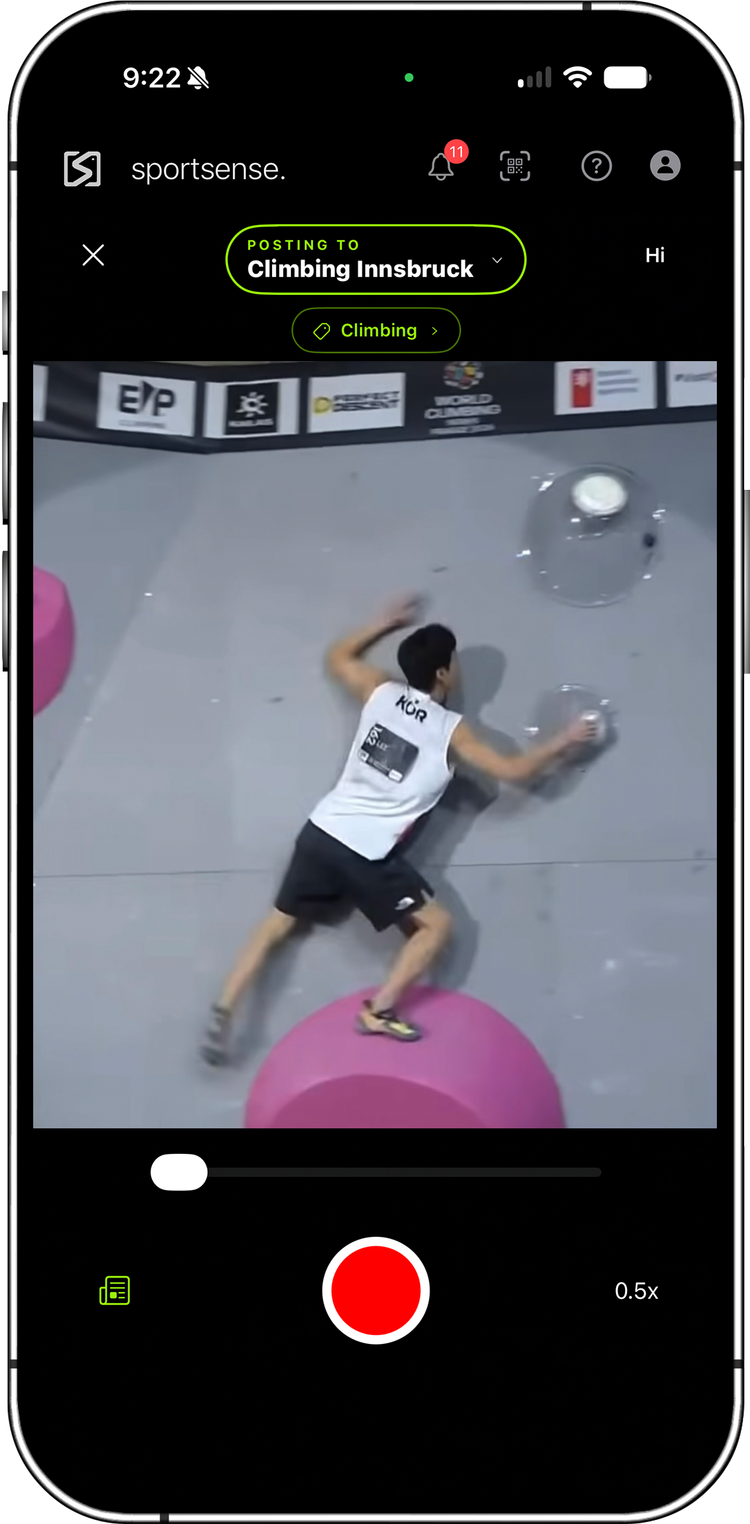
film straight into the app
the coach films from the mat or the belay and the clip lands in the right feed, filed with the athlete and the date instead of lost in a camera roll.
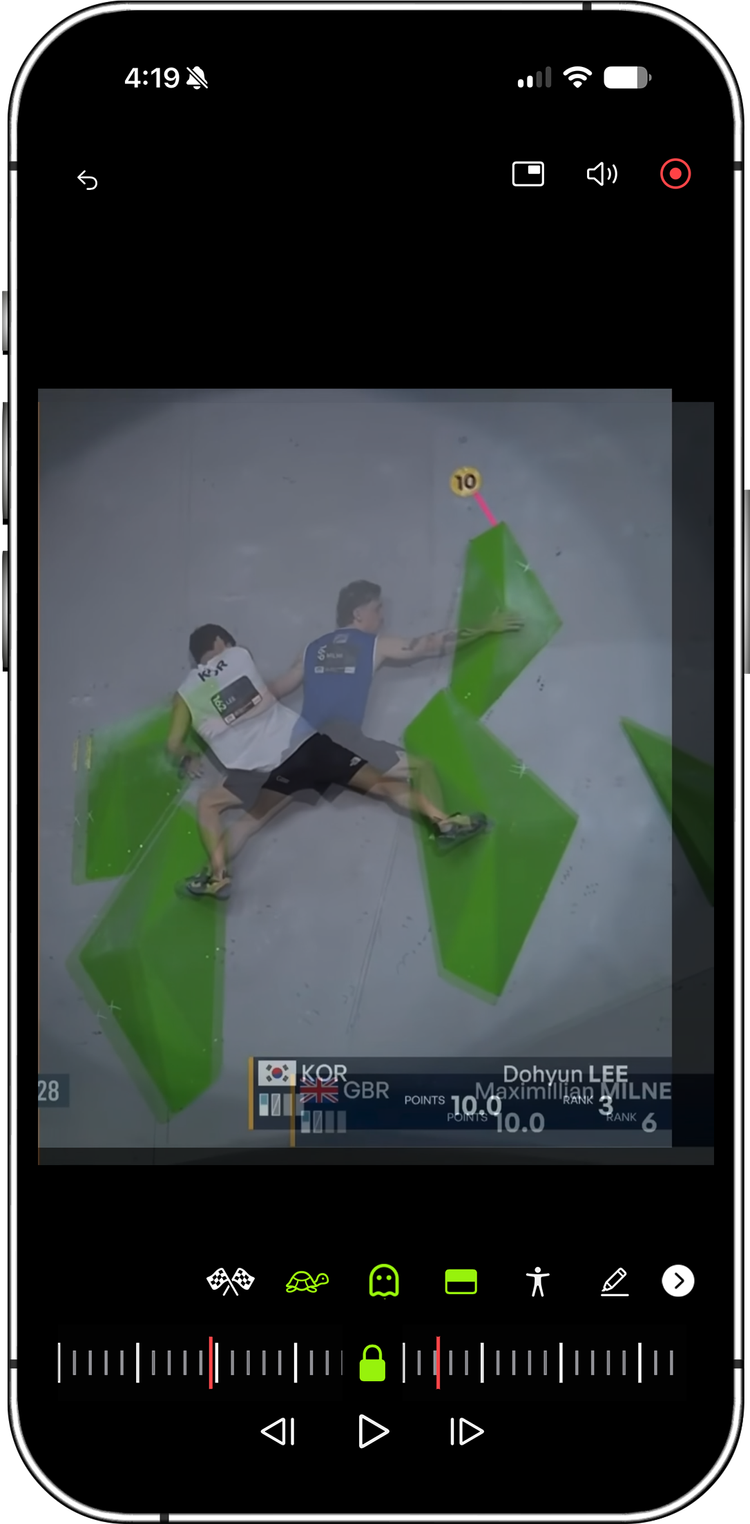
the ghost overlay
two attempts laid over each other, the athlete against the reference, so the difference in hip position or foot placement is visible instead of remembered.
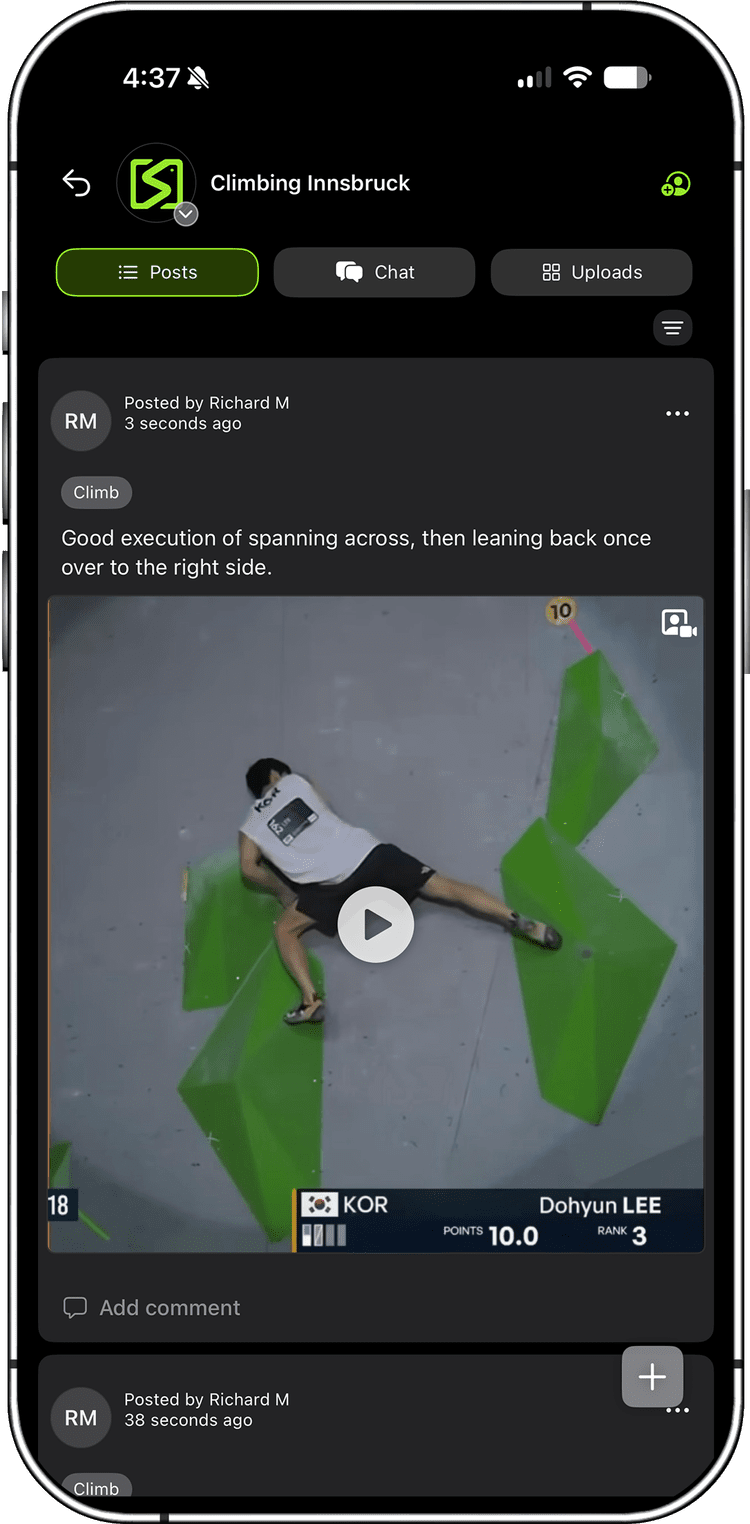
the squad feed
the clip posts to the feed where the squad and the coaches see it, comment on it, and pick the conversation up between sessions.
loading a referent model
a referent model is just a post: the clip, the teaching points, and the tags. building the cec library is publishing, not development.
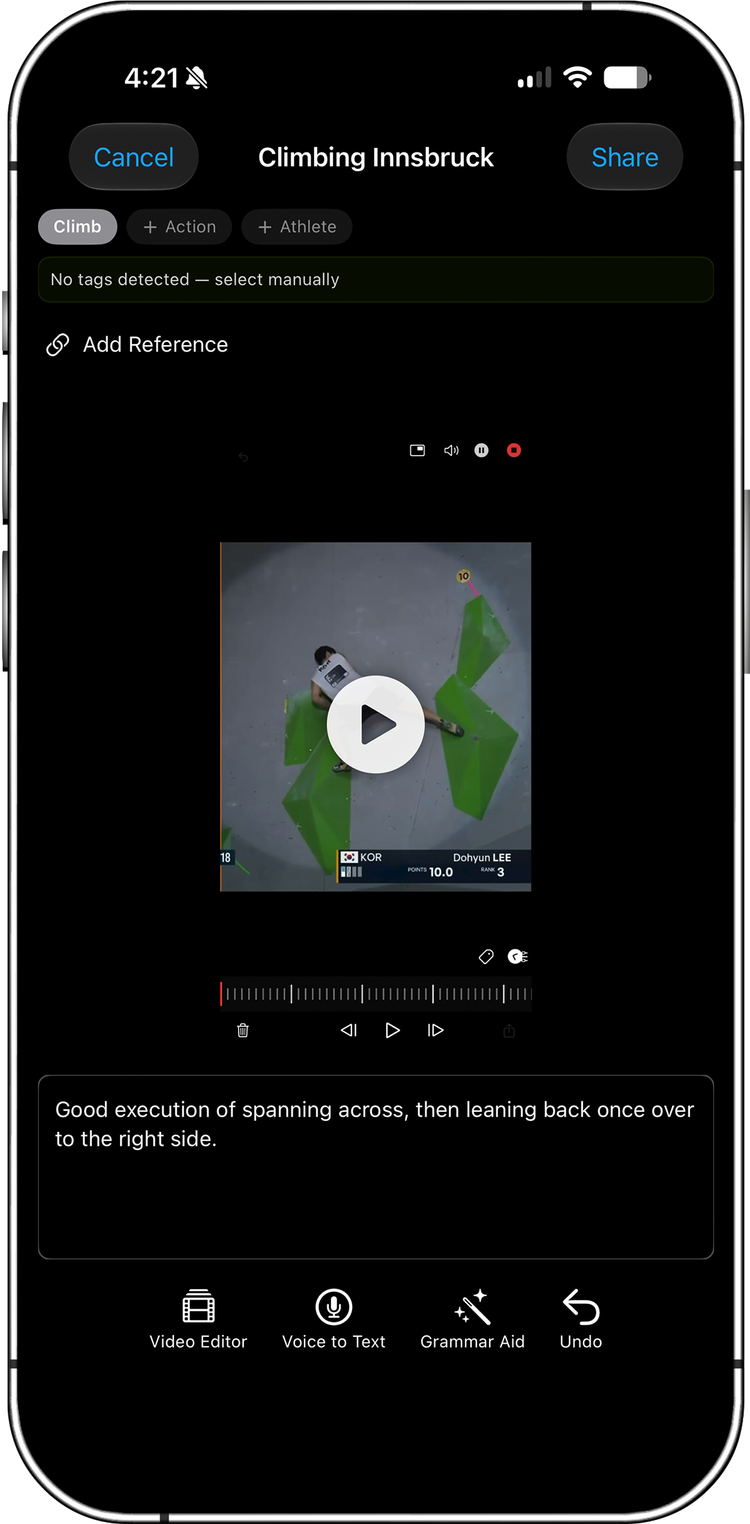
clip, teaching points, tags
whoever owns the standard posts the model clip, writes the mechanics and cues into the description, and tags the movement pattern, the holds, and the stage. from that moment every coach in the library can find it and compare against it.
the v1 skills model
the cec matrix is already the spec
a reference library is only as strong as the model behind it. cec has already written it. the athlete development matrix skills inventory defines four movement classes and sixteen patterns, names the stage each is introduced and consolidated, and the hold taxonomy gives every grip a code. this v1 turns that into the tag chain: discipline, movement, holds, stage, and camera angle. boulder is the build focus, and the same structure carries lead, speed, and top rope.
cec terminology, with the gaps left for the pilot
the terminology above is cec's own, from the adm skills inventory, and the hold codes follow the same system. what the pilot confirms is the floor language: which patterns matter most for boulder, what the coach network calls them mid-session, and the comp-style vocabulary from the world cup analysis. once the list is confirmed it is built into the app as the cec tag set, the national standard in every coach's pocket.
the tag set, in the app
the cec tags, as a coach would see them
these three screens are designed mockups, not screenshots. they redraw the live sportsense tagging workflow with the cec tag set and real climbing footage, so you can see exactly what the configured app looks like before a single tag is built.
the cec tag set, one sheet
sport, movement pattern, holds, stage, and camera angle, the adm tag chain as tappable tags on the post.

tags from the coach's voice
the coach names the skill while filming and the tags arrive already set. the voice flow is live in the app today; only the climbing terminology is new.
 CEC | Reference+
28 minutes ago⋯
Set opposing force vectors, keep static tension through the core, release one vector at a time. Drill: The Undercling Squeeze.

a model, published
the force opposition model as it lands in the cec reference feed: the clip, the mechanics, the adm drill, and the tags every coach can filter by.
the mockup
the v1 model, as a coach would hold it
the screens above are live today. this is how the full v1 model organizes the cec library as it grows from a handful of clips to the complete national standard, every skill, every discipline.
1 · browse the library, shelved by movement class
the shelves are the four movement classes from cec's adm (footwork mechanics, centre of mass control, dynamic execution, grip and hand interactions), with holds and stage as filters on top. boulder first: speed is its own world, and lead rides the same structure later.
2 · open a referent model
each model carries the clip, the mechanics as teaching points, the adm drill to run next session, and its tags: movement, holds, stage, and the camera angle for the library. a new coach sees what right looks like, and exactly what to look for.
3 · compare an athlete against the model
the coach films an athlete, drops the clip next to the referent model, and scrubs both in sync, with the ghost overlay, draw, and voiceover on top. this is the worlds use case in one screen: a canadian athlete against a global top 10 on the same boulder, filmed from the same fixed angle.
tap the phone or the steps to move through the flow
development pilot
cec boulder library
shelved by the adm movement classes, filtered by holds and stage
force opposition
M-CO · centre of mass control · boulder
mechanics, stage window, and drill from the cec adm, M-CO

what is already built
live today, configured for cec, and already proven for certification
this is the part that matters for a pathway decision. the platform is live, the v1 model supplies the climbing structure through configuration, and the evaluation workflow a certification pathway eventually needs is already running on sportsense for other certification bodies.
shipping product
what a coach can open and use right now, no build.
- structured reference libraries
- side by side comparison, with the ghost overlay, skeletal overlay, and voiceover
- tagging by skill, discipline, and camera angle
- squad feeds with posts, comments, and messaging
- voice notes transcribed to text
- coach subscription packages
setup, not development
your content and structure, switched on in the existing app.
- the tag set confirmed by the coach network, then built into the app as the cec standard
- cec referent models published as the national library
- the adm mechanics and drills on every model
- access for coaches who join through the pathway
the evaluation workflow
how certification bodies already run evaluations on sportsense:
- a private feed per evaluation, the candidate and the evaluator in it
- video clips submitted from a phone, no file-size gymnastics
- the full review in the feed, for first tests and retests
how it fits the pathway
one platform, three layers of the pathway
the cec library
every coach entering the pathway gets the cec referent library as part of it. a shared standard from day one, provided by the organization, not sold coach by coach.
compare and improve
coaches film their athletes and compare against the models, ghost overlay on top, so the standard turns into better coaching on the wall, not just a video they watched once.
full coaching tools
the coaches who want more opt into the full sportsense toolkit, athlete video feedback, comparison analysis, and their own squad feeds, at pathway member pricing.